Section 40(1)(a) of the Immigration and Refugee Protection Act (IRPA) makes a permanent resident or foreign national inadmissible “for directly or indirectly misrepresenting or withholding material facts relating to a relevant matter that induces or could induce an error in the administration of this Act.” Two words carry most of the weight. “Indirectly” means the false answer can come from an agent, a relative or a form-filler. “Could” means the officer does not have to show the fact changed the decision, only that it was capable of doing so. A visa refusal left off a travel history, an unlisted child or a former marriage can each be enough.
Misrepresentation on an Immigration Application

Four ways section 40(1) can reach a person
- aTheir own file
- False or missing material facts in an application, interview or supporting document, including anything a representative submitted for them.
- bA sponsor’s finding
- Being sponsored by someone found inadmissible for misrepresentation. Under s.40(2)(b) this applies only if the Minister is satisfied the facts justify it.
- cA vacated refugee decision
- A final decision to vacate an earlier decision that allowed a claim for refugee protection or an application for protection.
- dLost citizenship
- Ceasing to be a citizen under the Citizenship Act provisions listed in s.40(1)(d), which deal with citizenship obtained by false representation, fraud or concealing material circumstances.
When the five-year bar starts counting
Section 40(2)(a) sets the period at five years, but the start date depends on where the finding is made.
Finding made outside Canada
The five years run from the final determination of inadmissibility, usually the date of the visa office’s refusal.
Finding made in Canada
The five years run from the date the removal order is enforced, the day the person leaves under it. Months spent waiting for a hearing or appeal do not count.
“A foreign national who is inadmissible under this section may not apply for permanent resident status during the period referred to in paragraph (2)(a).”IRPA, s.40(3)
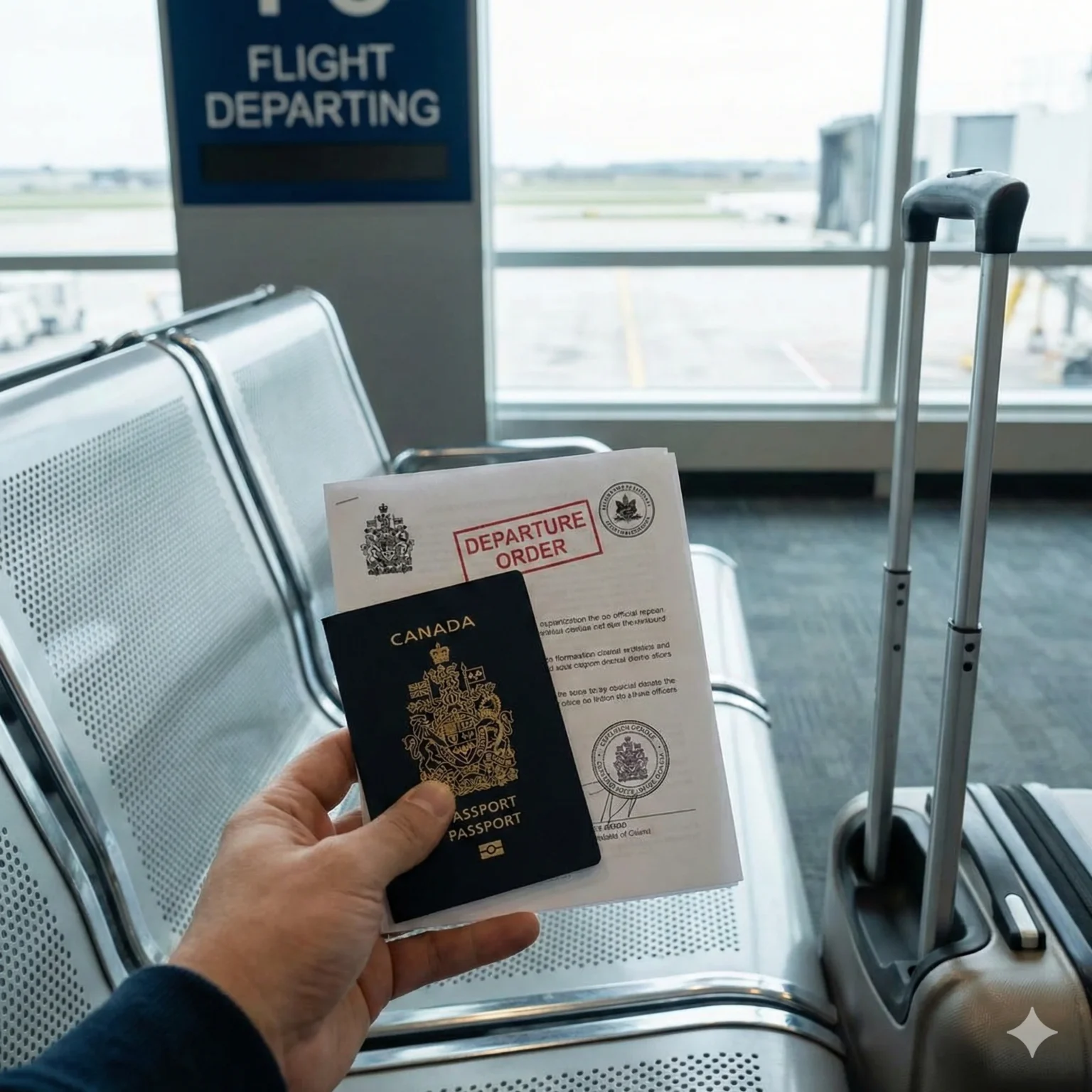

Before answering a procedural fairness letter, gather these
Officers usually send a procedural fairness letter before making a finding. It names the concern and sets its own response date.
- The letter and its deadline. The date is set by the officer in the letter, so it differs from file to file.
- Every version of the forms submitted, including drafts an agent or consultant prepared, and the messages exchanged with that person.
- Proof of the true fact: the divorce certificate, the earlier refusal letter, the employment records — whatever the officer says is missing or wrong.
- A dated account of how the error happened and who filled in which answer.
- The file’s own notes. Global Case Management System (GCMS) notes can be requested through an Access to Information request and show what the officer recorded.
- Evidence on materiality: why the corrected fact would not have changed how the application was assessed.
Where a finding can be challenged, and the rule that sets it
| Situation | Who decides | Rule |
|---|---|---|
| A report alleging misrepresentation against a person in Canada | Immigration Division of the IRB, at an admissibility hearing | IRPA s.44(2) and s.45 |
| A removal order made against a permanent resident | Immigration Appeal Division, which can weigh humanitarian factors | IRPA s.63(3) |
| A sponsorship refused for misrepresentation | Immigration Appeal Division, only when the person sponsored is the sponsor’s spouse, common-law partner or child | IRPA s.64(3) |
| A refusal by a visa office or IRCC with no appeal | Federal Court, with leave; filed within 15 days for a matter arising in Canada, 60 days outside Canada | IRPA s.72(2)(b) |
What a licensed paralegal can take on here
Angelina Shuster is a paralegal licensed by the Law Society of Ontario. By-Law 4 allows a paralegal to represent a party before administrative tribunals, which includes the Immigration Division and the Immigration Appeal Division, where misrepresentation reports and removal-order appeals are heard. Federal Court proceedings are outside that scope. Our legal team assists with the full range of your matter, including applications filed with IRCC, such as a temporary resident permit under IRPA s.24 or a humanitarian and compassionate request under s.25 during the five-year period.
This article is general information about the law in Ontario and is not legal advice. Reading it does not create a paralegal-client relationship. Every matter turns on its own facts — speak to a licensed representative about yours.
Questions about misrepresentation findings
Does an unintended error count as misrepresentation?
It can. Section 40(1)(a) covers indirect misrepresentation and facts that could induce an error, so an omission made by a form-filler, or one the applicant did not mean to make, can still lead to a finding. Whether the fact was material is decided by the officer or the tribunal on the evidence.
When can a person apply for permanent residence again after a finding?
Section 40(3) bars an application for permanent resident status during the period in s.40(2)(a): five years from the final determination when the finding is made outside Canada, or five years from the date the removal order is enforced when it is made in Canada.
Can a spousal sponsorship refused for misrepresentation be appealed?
Under IRPA s.64(3), an appeal to the Immigration Appeal Division is available only when the foreign national is the sponsor’s spouse, common-law partner or child. Other sponsored relatives have no appeal to the IAD on that ground.
Official resources
External links are provided for general information only and are not legal advice.

Keep Reading
Related Articles

New System for Selecting Immigrants to Canada
In 2014 we had a program which allowed professionals (Federal Skilled Worker Program) who were listed in the demanded occupations’ list to apply to immigrate ...
Read More
Update on Temporary Foreign Worker Applications
Temporary Foreign Worker Applications Fall By 74% (Its time for RCICs to change directions too. No approvals, means no clients and no business). The month ...
Read More
Canadian Citizenship Law News
Government of Canada Cracking Down on Citizenship Fraud In order to be eligible to obtain Canadian citizenship, prospective Canadian citizens must meet a number of ...
Read More