The Basis of Claim form is the document a refugee claim is built on. It is completed once, early, and then read by the Refugee Protection Division member before the hearing, compared against every supporting document on file, and used as the reference point for most of the questions asked on the day. Most claimants fill it in without knowing which of its questions the Division will later treat as central. This article goes through it section by section.
Angelina Shuster is a paralegal licensed by the Law Society of Ontario, and representation before the Refugee Protection Division is within a licensed paralegal's scope. What follows is general information about procedure in Canada and is not legal advice; reading it does not create a paralegal-client relationship, and every claim turns on its own facts.
What is the Basis of Claim form?
It is the written account of who a claimant is and why they fear returning home. The Refugee Protection Division Rules define it as the form in which a claimant gives the information listed in Schedule 1 to those Rules, and that schedule — twenty-four numbered items — is the real specification behind the questions on the page. The Immigration and Refugee Board describes its purpose as presenting the claim to the Division: identity, family, documents and travel history, and why protection is being sought in Canada.
The current form applies to claims made after 14 December 2012. It is not an application that is graded and returned. It is evidence, signed under a declaration with the same force as an oath, and it stays on the file for the life of the claim.
When does the form have to be provided, and to whom?
That depends entirely on where the claim was made, and the two routes have different deadlines and different recipients. The distinction is set out in the Regulations rather than left to the Division's discretion.
| Where the claim was made | Who receives the form | Deadline in the Regulations |
|---|---|---|
| Inside Canada, not at a port of entry (an inland claim) | The officer handling the claim | No later than the day the officer decides whether the claim is eligible |
| At a port of entry — an airport or land border | The Refugee Protection Division | No later than 15 days after the claim is referred to the Division |
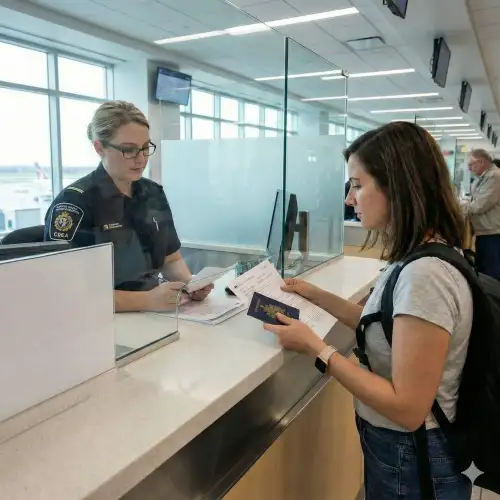
An inland claimant therefore hands the completed form in as part of making the claim, while a port-of-entry claimant leaves the border with a blank form, a notice to appear and a fifteen-day clock. What happens at the border interview itself is a separate step, described in what a claimant is asked at a Canadian port of entry.
Where the fifteen days cannot realistically be met, the Rules provide for an application to extend the time limit, and the Regulations allow the Division to extend it for reasons of fairness and natural justice. That application has its own deadline: it must reach the Division no later than three working days before the original time limit expires. Where the reason is medical, a recent, legible certificate from a qualified medical practitioner is filed with it, and the Rules specify that the certificate sets out the particulars of the condition without naming the diagnosis.
What does the identity part of the form ask for?
The opening items establish who the claimant is, which country or countries owe them protection, and who else is connected to the claim. On paper it reads like routine biographical data. At a hearing it is frequently the most contested part of the file, because identity is a live issue in a large share of refused claims.
- Name, date of birth and gender — the anchor for every other document on the file.
- Nationality, and ethnic, racial or tribal group — often the characteristic the alleged persecution is tied to.
- Religion, including denomination or sect — the detail is deliberate, since claims involving religion frequently turn on the specific community rather than the broad faith.
- Languages and dialects spoken — this feeds the interpretation request, and naming a dialect here rather than only the language avoids a mismatch at the hearing.
- Citizenship history — every country of past or present citizenship, how and when it was acquired, and its current status. A claim is assessed against every country a person is a citizen of, not only the one they left.
- Relatives — spouse or common-law partner, children, parents, brothers and sisters, living or dead, with dates of birth, citizenship and country of residence.
- Any earlier refugee or asylum claim made in Canada or anywhere else, by the claimant or by close family, including claims made at a Canadian office abroad or to the UNHCR, with the result and the file number.
- Visa history — whether an application was ever made to come to Canada, of what type, when, where, and whether it was issued or refused, with the reasons for any refusal.
- Contact information, counsel, official language and interpretation needs — the block that determines how the Division communicates and how the hearing is run.
What does the narrative section ask for?
The narrative is where the claim is actually made, and it is structured around a sequence of specific questions rather than an open invitation to tell a story. Schedule 1 sets out what has to be covered.
| The question | What the Division is establishing |
|---|---|
| What would happen on return today — who would cause it, and why | Forward-looking risk, and its link to a ground in the refugee definition |
| Past harm, mistreatment or threats to the claimant or the family | When, by whom, and whether similarly situated people were treated the same way |
| Whether protection or help was sought from an authority or organisation | State protection — and where none was sought, the explanation |
| When the claimant left, and why at that moment | Chronology, and how the departure fits the events described |
| Whether the claimant moved elsewhere within their own country | Internal flight — why living elsewhere in that country is said not to be possible |
| Whether the claimant went to another country for safety | Time spent there, and whether protection was claimed; if not, why not |
| Minors included in the claim | The relationship to each child, and any consent permitting care or travel |
| A child aged six or younger | A specific explanation of the risk to that child on return |
| Anything else considered important | The claimant's own additions, in their own words |
Three of those questions do more work than the others. Seeking help from authorities goes to state protection; moving within the country goes to internal flight; time spent in a third country goes to why protection was not claimed there. A narrative that answers only "what happened to me" and leaves those three unanswered has skipped the parts the legal test turns on. The underlying definition — Convention refugee, or person in need of protection — is unpacked in the definition of a Convention refugee.
What has to be attached to the form?
Copies of identity and travel documents, plus any other relevant documents the claimant holds. The Rules are unusually direct on one point: those documents are attached whether they are genuine or not. A document obtained irregularly is still part of the record of how a person travelled, and the Rules require it rather than inviting a choice about it. Documents already seized by an officer, or already sent to the Division by an officer, do not have to be attached again. Where an identity or travel document reaches a claimant only after the form has been filed, the Rules require two copies to go to the Division without delay rather than waiting for the hearing.
What are the declarations at the end?
The signature block is short and carries more weight than its size suggests. The claimant declares that the information given is complete, true and correct, and that the declaration has the same force and effect as if made under oath. That is the sentence that makes an inconsistency between the form and the oral testimony a credibility issue rather than a clerical one.
Two further declarations follow, and which applies depends on how the form was completed. A claimant who filled it in without an interpreter signs a statement that they can read the language of the form and understand what is being asked. Where an interpreter helped, the interpreter signs their own: that they were proficient in the language and any dialect used, that the completed form and all attachments were interpreted to the claimant, and that the claimant indicated they understood.
How is the form corrected after it has been filed?
Through a defined amendment procedure, not by raising it for the first time at the hearing. The Rules set out exactly what an amendment looks like: the original and a copy of each changed page, each new page signed and dated, the changes or additions underlined, and a fresh declaration that the form together with the changes is complete, true and correct. Amendments have to reach the Division no later than ten days before the date fixed for the hearing.
The procedural reason to use that route is simple. A correction filed in advance is a document; a correction offered under questioning is an inconsistency that has to be explained on the spot.
What happens if the form is not provided in time?
The Division does not simply refuse the claim — it moves to an abandonment procedure with its own hearing. The written information an officer gives every claimant states plainly that a claim may be declared abandoned without further notice if the completed form is not provided or the claimant does not appear.
Where a port-of-entry claimant misses the deadline, the Rules require a special hearing on abandonment no later than five working days after the day the form was due, and the completed form is to be provided at that hearing if it has not already reached the Division. The Division must give the claimant an opportunity to explain why the claim should not be declared abandoned, and must weigh that explanation together with any other relevant factor, expressly including whether the claimant is ready to proceed. A claim declared abandoned is never decided on its merits, which is what separates it from a refusal — a distinction set out in the abandoned refugee claim.
How the form is used at the hearing
It sets the agenda. Where the Minister has not intervened, the Rules place the Division first in the order of questioning and the claimant's counsel second, so the opening hours of a hearing are typically a member working through the narrative already on file. The hearing tests that written account against oral testimony and against published country evidence.
That is why the form and the supporting documents are prepared together rather than in sequence. A date in a medical certificate that contradicts a date in the narrative, a relative listed in one place and not another, a dialect named at the hearing but never requested in writing — each is created at the drafting stage and surfaces months later. Karb Law appears before Immigration and Refugee Board tribunals, and refugee claims are one of the firm's regular areas of work. Anyone with a filing deadline or a hearing date can contact the office to discuss representation.